
USDA Growing Zones for Montana, Idaho, Wyoming, Utah & Colorado
BigBareRootTrees.com provides USDA hardiness zone maps for Montana, Idaho, Wyoming, Utah, and Colorado. Each map shows the planting zones used to determine which bare-root trees will survive winter temperatures and grow successfully in each state. These USDA growing zone maps help customers choose fruit trees, shade trees, and ornamental trees that match their local climate before ordering.
Montana USDA Growing Zones
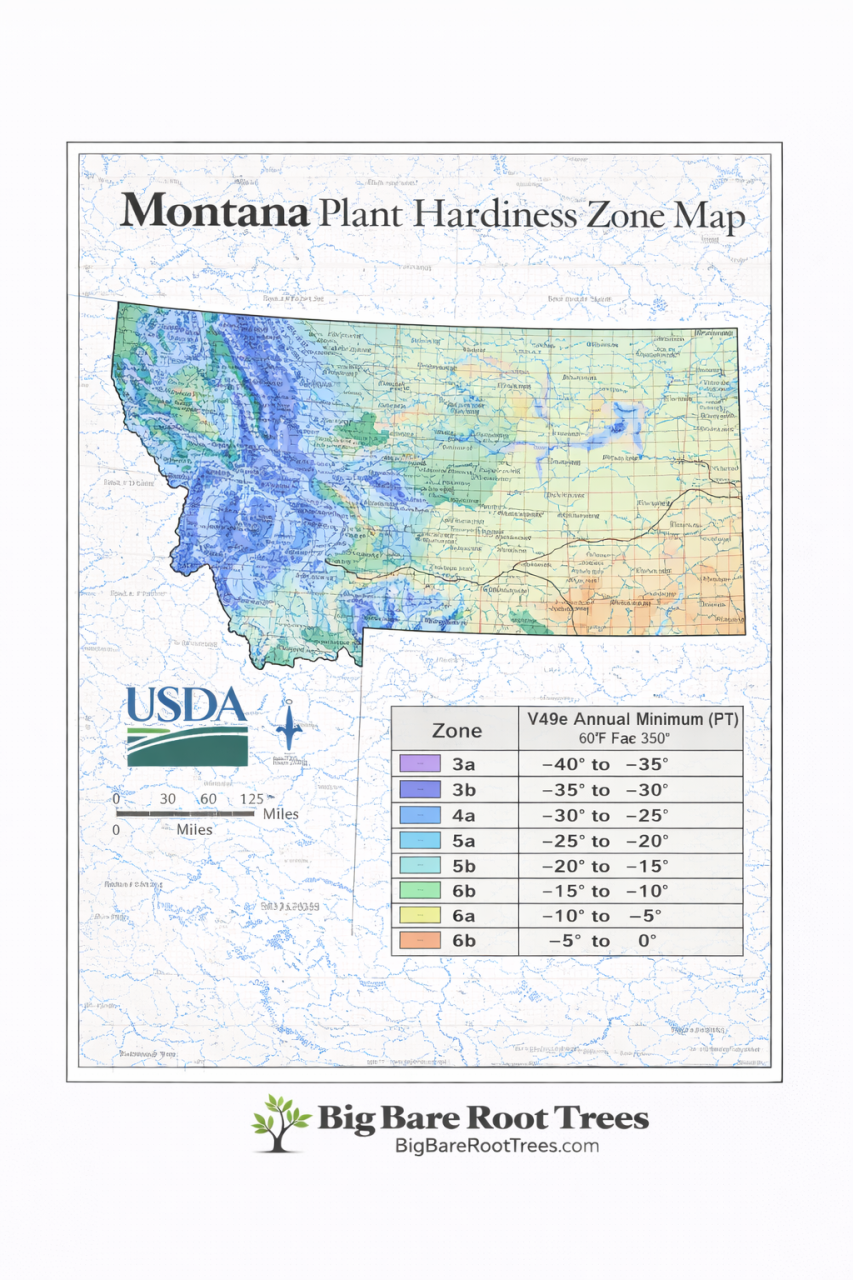
Montana spans USDA hardiness zones 3a through 6b, with colder mountain valleys in the west and warmer plains in the east. Bare-root trees planted in Montana must be selected for cold tolerance, late frost resistance, and short growing seasons. At BigBareRootTrees.com, we supply Montana-ready fruit trees, shade trees, and ornamental trees proven to survive Zone 3–6 winters.
Idaho USDA Growing Zones
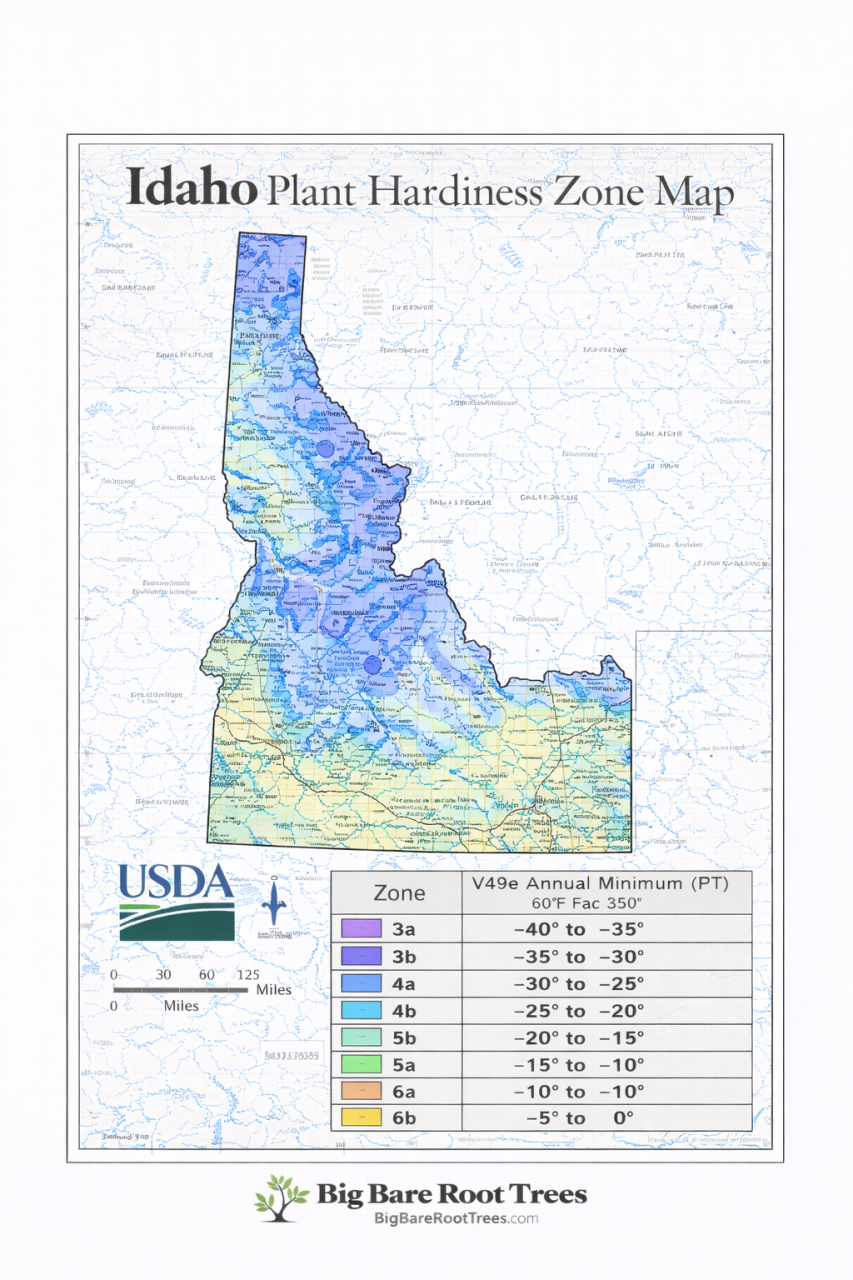
Idaho includes USDA zones 4a through 7a depending on elevation and region. Southern Idaho supports warmer fruit varieties, while northern Idaho requires cold-hardy stock. Bare-root trees shipped by BigBareRootTrees.com are selected by Idaho growing zone to ensure strong root establishment and winter survival for fruit trees, shade trees, and ornamental trees.
Wyoming USDA Growing Zones
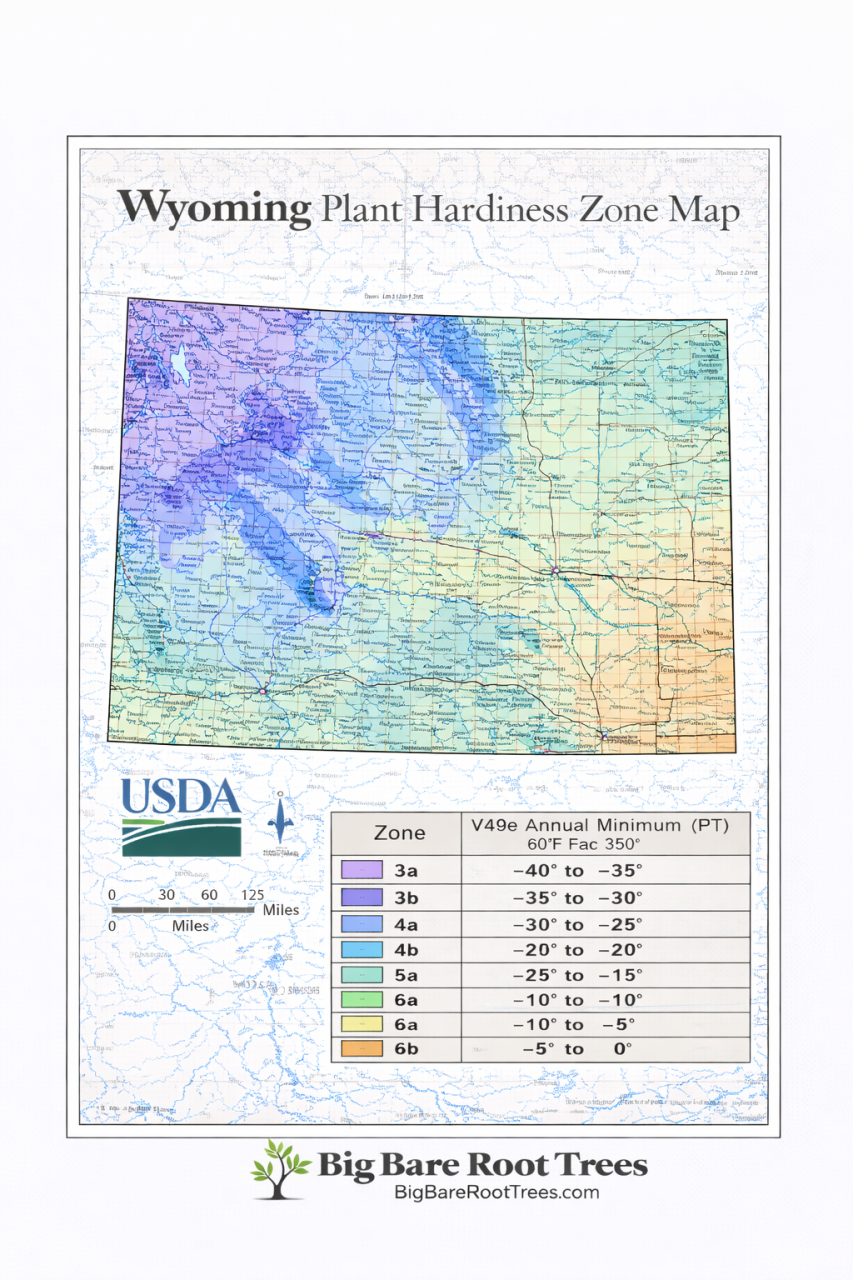
Wyoming is dominated by USDA zones 3a through 5b, making it one of the coldest planting regions in the U.S. Trees must tolerate deep freezes, wind exposure, and late spring frosts. Our bare-root trees are sourced specifically for Wyoming’s extreme climate, ensuring strong root systems and long-term survival.
Utah USDA Growing Zones
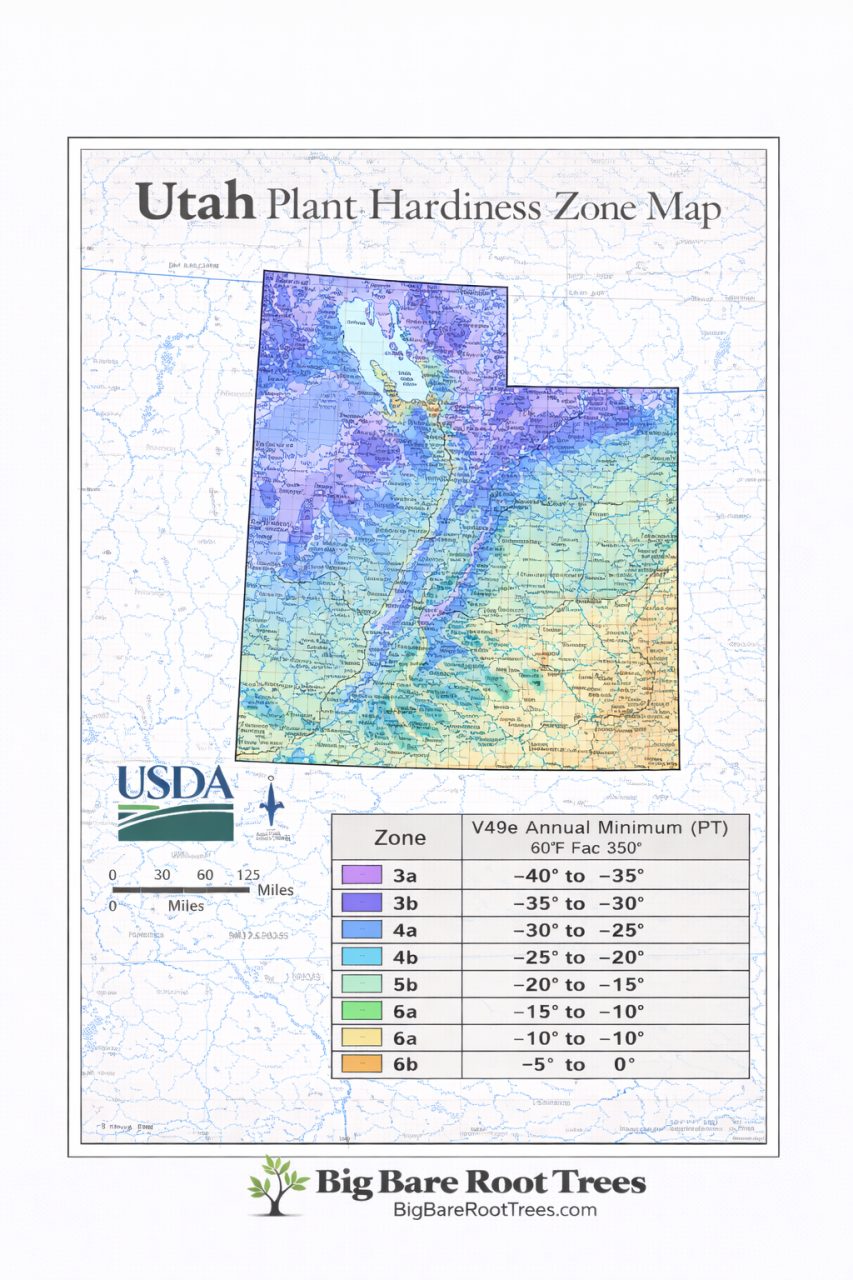
Utah spans USDA zones 4a through 8a, with cold mountain climates and warm desert valleys. Tree selection must match elevation and heat tolerance. BigBareRootTrees.com delivers bare-root trees matched to Utah’s growing zones, allowing fast establishment in both northern and southern climates.
Colorado USDA Growing Zones
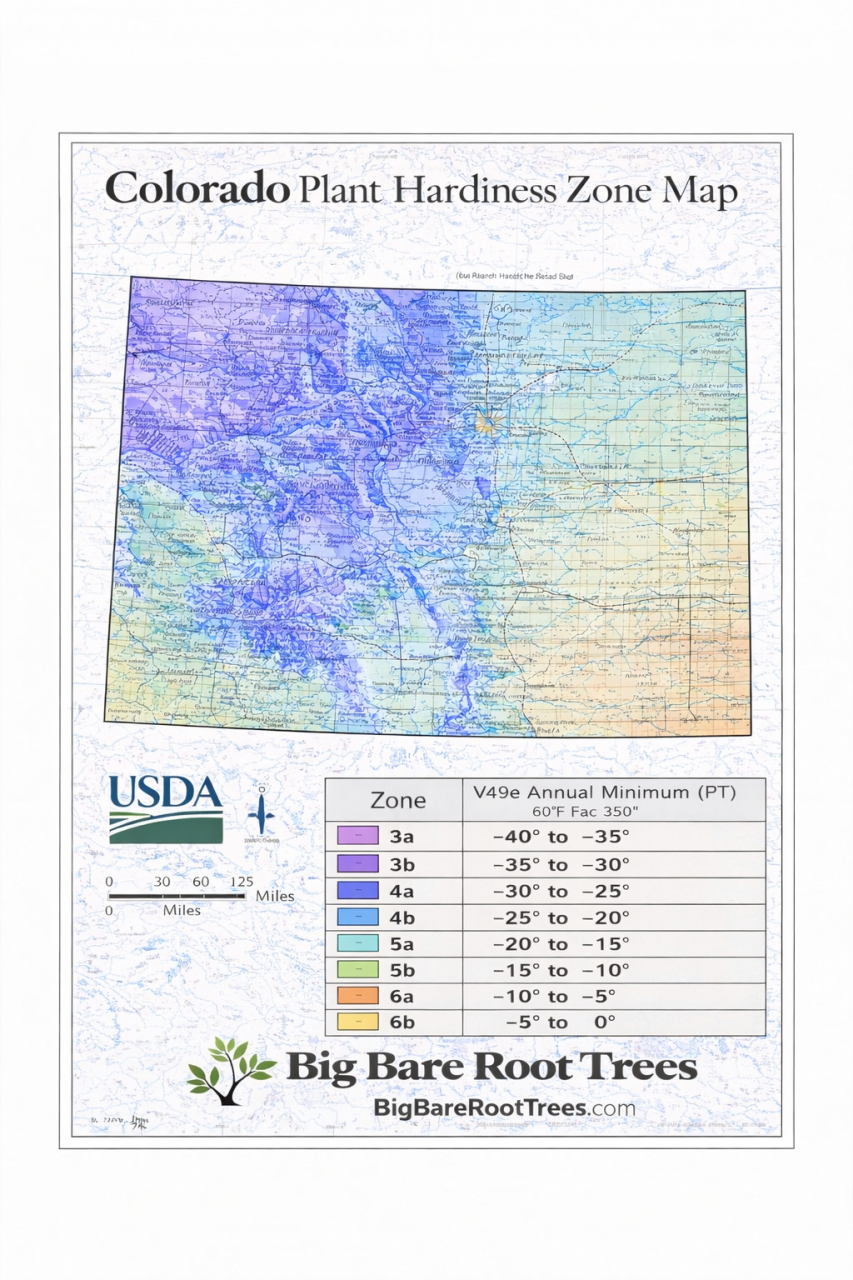
Colorado ranges from USDA zones 3a through 7a, with dramatic changes by altitude. High-elevation areas require cold-hardy species, while Front Range and Western Slope support fruit and shade trees. Our bare-root trees are selected by Colorado growing zone to maximize survival and growth.